The Treaty
A Court of Thorns and RosesThe Treaty is the pact that ended the War between humans and the High Fae and created the political and physical separation between the Mortal Realm and Prythian. Its most immediate consequence is the principle that an unprovoked human attack on faerie-kind must be paid for with a human life. When Feyre Archeron kills Andras, that forgotten clause turns an act of survival into a binding claim against her, forcing her across the Wall and into the immortal realm. The Treaty therefore functions not merely as historical background but as the legal mechanism that begins the central plot and exposes the continuing power of an agreement mortals believe they have outgrown.
Origins and Division of the Realms
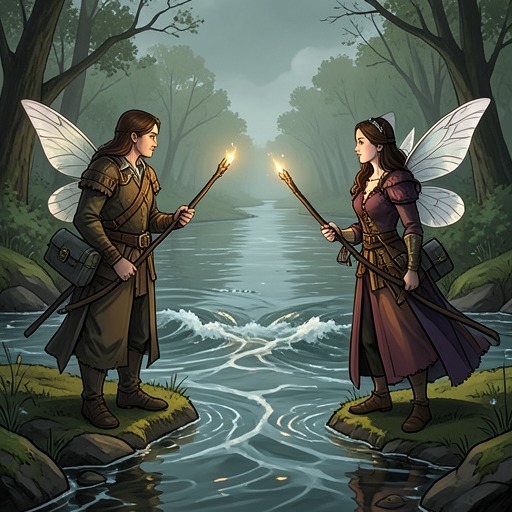
The Treaty was established after a long period in which humans had been enslaved by High Fae overlords. Humans had built faerie civilizations, temples, and other monumental works through their blood and labor before rebelling across many lands. The War that followed was so destructive that six mortal queens were required to craft a settlement capable of ending the slaughter on both sides. The resulting arrangement divided the world: the North was conceded to the High Fae and faeries, who withdrew with their magic, while the South became the domain of mortals, condemned to survive by working the earth.
The Wall was the physical expression of that division. It bisected the world and was intended to keep the two populations apart, leaving mortals protected from the supernatural powers beyond it. Yet the separation was never absolute. Stories circulate that faeries can pass through holes in the barrier, and Feyre later discovers the Wall as an invisible obstruction cleaving through the forest while faeries apparently move through it. Its permeability makes the Treaty’s promise of protection unstable: the boundary exists, but it can be breached, tested, or manipulated.
Law, Memory, and the Life-for-a-Life Clause
For mortal society, the Treaty has become an almost discarded inheritance. Feyre describes the human world as having forgotten the names of its gods and much of the history that once connected it to the High Fae. Even so, the promise made centuries earlier remains binding. The Treaty is remembered in practice by the beings who possess the power to enforce it, not by the mortals who benefit from its protection.
The clause invoked against Feyre is precise. Any unprovoked attack by a human on faerie-kind must be answered with a human life in exchange. The distinction between provoked and unprovoked violence matters: the mercenary who killed a faerie in town had attacked first, so that death did not automatically trigger the same penalty. Feyre, however, does not know this part of the Treaty when the beast arrives at her cottage. Her ignorance offers no defense, because the faerie explains that most mortals have chosen to forget the provision, making their punishment more enjoyable to those who enforce it.
The Treaty thus converts historical amnesia into vulnerability. Humans imagine the Wall as a shield while forgetting the obligations that accompany it. The protection purchased by the ancient settlement is not free: its currency is memory, compliance, and, when the law is broken, a life.
Feyre Archeron's Forced Crossing
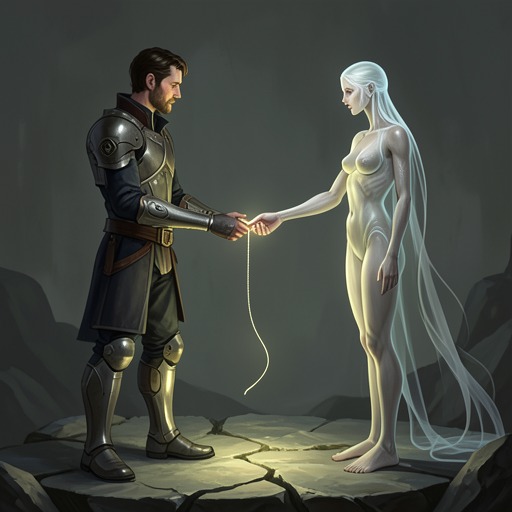
After Feyre kills Andras, the beast does not simply take revenge in an uncontrolled act of violence. It presents the Treaty as a legal requirement and offers two possible forms of payment. Feyre may be killed in the Mortal Realm, or she may cross the Wall and live out the remainder of her days in Prythian. Her choice is constrained, but it is still structured as a bargain: the Treaty must claim her life in some form, while the manner of collection remains negotiable.
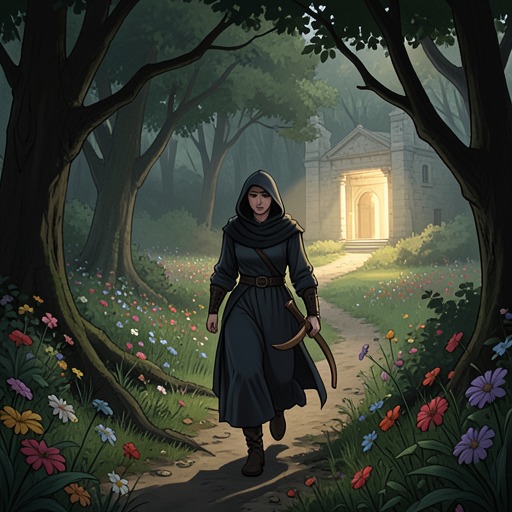
The journey makes the pact’s threshold quality visible. It takes two days to travel from Feyre’s cottage to the Wall and enter the southernmost border of Prythian, a passage she experiences as imprisonment and possible salvation at once. A gate opens without a porter or sentry, and the beast continues through while her horse follows. The Treaty’s border is therefore guarded less by ordinary officials than by supernatural authority and the force of the obligation itself.
Once inside Prythian, Feyre’s status changes before she understands the society into which she has been delivered. She encounters masked High Fae, glamours that prevent her from seeing their features clearly, rituals tied to the courts, and a hierarchy organized around the seven High Lords. The Treaty has carried her from one realm to another, but it has not made her free; the legal promise that spares her immediate death also places her under the power of the faerie world.
The Treaty's Continuing Political Consequences
The Treaty’s settlement does not eliminate conflict. Reports suggest that faerie creatures have been slipping through the Wall and attacking human or faerie settlements, while the old balance between the realms appears increasingly fragile. A mercenary tells Feyre that a pack of Martax crossed the boundary and tore apart half a village, and that a nobleman who had fled south believed the attacks had worsened over fifty years. These reports show that the Treaty’s territorial division is being eroded by forces that the High Lords may no longer control.
Within Prythian, the Treaty’s framework also coexists with later systems of domination. Amarantha has trapped the seven High Lords beneath the sacred mountain and uses her power to destroy borders, send creatures against the courts, and test what strength remains to Tamlin. The sickness that mortals call the Blight is revealed by Alis to be Amarantha herself, making the political assault on Prythian inseparable from the ecological and magical devastation spreading through its lands. The Treaty ended one historical war, but it did not prevent new forms of conquest from arising within the faerie realm or from threatening the Mortal Realm.
The crisis extends across the courts. The Blight burns through magic and destroys minds; in the Winter Court it kills two dozen younglings, while other courts suffer attacks that move progressively farther south. The Treaty’s promise of separation cannot contain this disaster. Its borders, like its historical guarantees, remain vulnerable to concentrated power and to the failure of those who are supposed to govern.
Boundaries, Ritual, and Transformation
The Treaty also provides the background against which Feyre’s later encounters with Prythian’s customs become intelligible. At Calanmai, bonfires and masked crowds gather while the Great Rite renews the magic of the land. Lucien Vanserra explains that each of the seven High Lords performs the rite annually because their magic comes from the earth and returns to it. Tamlin becomes the Hunter, emptied of ordinary identity and driven to find the Maiden so that their coupling will release magic and regenerate life for the coming year. This ritual reveals a faerie order based on reciprocal exchange between ruler, body, land, and season, in contrast with the Treaty’s more punitive exchange of life for life.
The Treaty’s most consequential transformation occurs at the boundary between life and death. In the throne room beneath the mountain, Feyre dies after completing the trials imposed by Amarantha. Her experience becomes an uncertain passage through darkness and golden light before she gasps back into her body. The crowd witnesses that she has not merely survived: her skin gleams, her fingers seem longer, and she possesses new strength, speed, and sleekness. Feyre has become High Fae.
That ending reconfigures the Treaty’s original division. The pact once separated mortal humanity from faerie-kind, but Feyre crosses the boundary first by legal compulsion and finally by bodily transformation. The woman claimed under its life-for-a-life logic returns as a being who no longer belongs wholly to the mortal side of the settlement. The Treaty remains the law that brought her into Prythian, yet its consequences help produce a new identity capable of unsettling the very categories the agreement was created to preserve.